2026 Top Types of Intramedullary Nails for Global Buyers
For global buyers, choosing among Intramedullary Nails requires more than comparing prices, materials, or package photographs. Each nail must match the fracture pattern, bone anatomy, surgical approach, and expected loading conditions. A femoral shaft fracture may require an antegrade or retrograde locked nail. A proximal femur fracture may need a cephalomedullary design. Tibial injuries often demand careful attention to nail diameter, curvature, locking options, and entry-point geometry.
Gerhard Küntscher, widely recognized as a pioneer of intramedullary fixation, described the medullary canal as “the natural splint of the long bone.” That idea still matters. The implant works inside the bone, not merely against it. However, modern purchasing decisions involve more than surgical theory. Buyers should examine titanium or stainless-steel grades, fatigue strength, locking-screw accuracy, targeting instruments, sterile packaging, traceability, and supplier quality systems. Small details matter. A poorly matched screw can delay a procedure.
This guide reviews the top types of Intramedullary Nails expected to attract global attention in 2026, including standard locked nails, expandable nails, flexible nails, cephalomedullary nails, and specialty pediatric systems. It also considers practical factors such as radiographic visibility, inventory planning, surgeon familiarity, and regional regulatory documentation. No single nail fits every hospital. That is easy to forget. Product selection can also become too focused on specifications, while operating-room workflow receives less attention. A reliable decision should balance clinical evidence, manufacturing consistency, and real-world usability. Where evidence remains limited, buyers should ask better questions before committing.
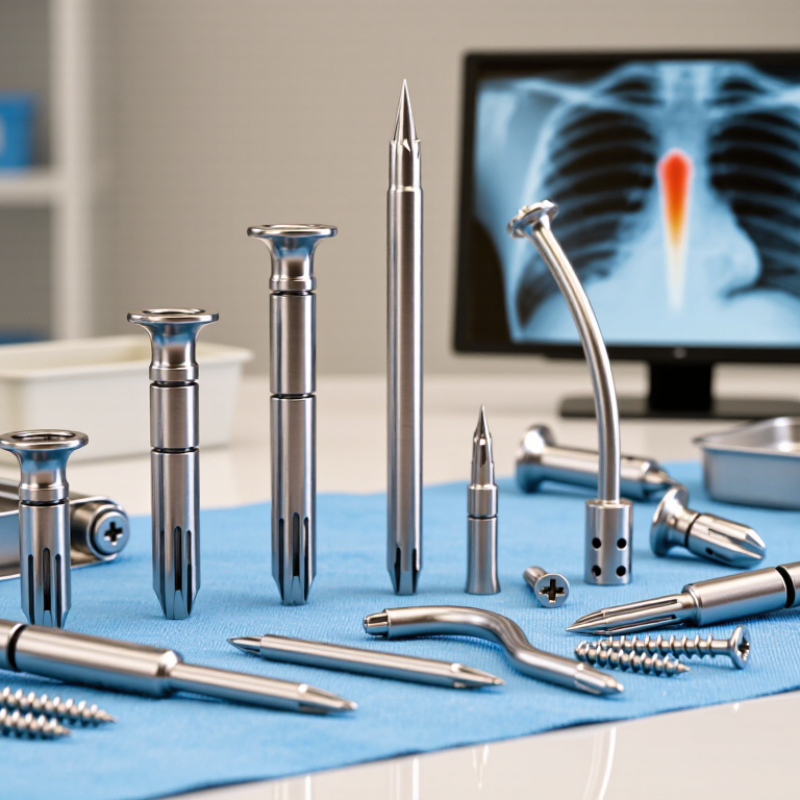
What Intramedullary Nails Are and How They Support Fracture Fixation
2026 Top Types of Intramedullary Nails for Global Buyers
Intramedullary nails are metal rods placed inside a bone’s medullary canal. They stabilize fractures from within. Unlike plates, nails share load along the bone’s central axis. This can support earlier movement when fixation and soft-tissue conditions are suitable.
Common types include standard locked nails, cephalomedullary nails, recon nails, flexible nails, and humeral nails.
Standard locked nails often treat shaft fractures in the femur or tibia. Cephalomedullary designs support fractures near the hip. Recon nails use additional locking options near the femoral head. Flexible nails may suit selected pediatric fractures, but patient age and fracture pattern remain decisive.
A 2021 Lancet Healthy Longevity analysis reported about 178 million new fractures worldwide in 2019. That scale increases demand, but it does not make every nail interchangeable. Canal shape, locking-hole accuracy, implant diameter, and surgical instruments matter.
No nail is universally best. That point is easy to forget.
Tips: Buyers should compare radiographic indications, material standards, fatigue testing, and available sizes. Ask whether the system supports static and dynamic locking. Review training requirements and postoperative data, not only unit price. The AO Surgery Reference emphasizes fracture classification, reduction quality, and correct locking strategy. These details can change outcomes. Procurement teams should also confirm local registration, traceability, sterilization status, and surgeon familiarity before shipment. Even strong data has limits. Product selection still needs case-by-case clinical judgment.
Major Intramedullary Nail Types Used in Modern Orthopedic Surgery
Modern orthopedic surgery uses intramedullary nails according to fracture location, bone geometry, and patient stability. The main types include femoral, tibial, humeral, cephalomedullary, and flexible nails. Femoral nails may be antegrade or retrograde. Antegrade insertion supports many shaft fractures, while retrograde access can help with distal injuries. Tibial nails commonly include proximal and distal locking options. Humeral nails require careful attention to the shoulder and radial nerve.
Cephalomedullary nails combine a central shaft with a large proximal lag element. They are widely used for intertrochanteric and subtrochanteric fractures. Flexible nails are more common in selected pediatric cases, where controlled elasticity matters. A 2024 Grand View Research assessment reported continued growth in the global orthopedic trauma devices market, driven by aging populations and rising fracture treatment demand. Definitions vary between reports, however, so buyers should check whether nails are counted separately from complete fixation systems.
Clinical experience shows that nail diameter, locking configuration, entry point, and material affect performance. A longer nail may improve load sharing, but it can complicate insertion. Small details matter. A 2024 MarketsandMarkets report also identified internal fixation as a major segment of orthopedic trauma devices. Yet market volume does not prove clinical superiority. Surgeons should compare radiographic evidence, instrument compatibility, sterilization data, and training requirements. The categories overlap, and that weakness can confuse procurement teams. A practical specification sheet should match each nail type to fracture patterns, anatomy, and postoperative follow-up capacity.
Key Selection Factors for Global Buyers in 2026
In 2026, global buyers should match the intramedullary nail type to anatomy, fracture pattern, and surgical resources. Common options include antegrade and retrograde femoral nails, tibial nails, humeral nails, flexible nails, and cephalomedullary systems. Each design needs suitable diameter, length, curvature, and locking options. A millimeter-level mismatch can affect reduction and postoperative stability.
Market data supports careful planning. The World Health Organization reports that about 1.71 billion people live with musculoskeletal conditions worldwide. Its ageing-population data also indicates rising demand for fracture care. Fortune Business Insights projects continued growth in the global orthopedic implants market through 2032. However, market growth does not prove that one nail design suits every hospital. Buyers should review peer-reviewed clinical evidence, failure rates, and compatibility with available imaging systems.
Procurement teams should examine material traceability, implant fatigue testing, instrument completeness, and sterilization workflows. Check whether targeting guides work smoothly under operating-room pressure. Confirm stock availability for common lengths and locking screws. Training matters too, especially for facilities managing limited fluoroscopy access. Tender documents should request regulatory certificates, technical files, and post-market surveillance information. The cheapest system may become expensive when instruments are missing. A perfect specification rarely exists. Local surgeon feedback should still challenge the purchasing committee, because catalogue data cannot reveal every practical difficulty.
How to read this chart: Scores use a 1–5 educational comparison framework based on common orthopedic application principles, where 5 indicates stronger relevance to the factor. The scores are not market-share data or clinical outcome claims. Final selection should consider fracture pattern, anatomy, bone quality, locking options, instrumentation, surgeon experience, and applicable regulatory requirements.
Quality, Compliance, and Supplier Evaluation for International Purchasing
2026 Top Types of Intramedullary Nails for Global Buyers
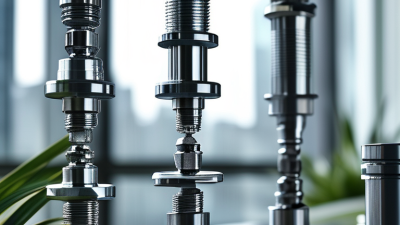
For global buyers, intramedullary nail selection begins with anatomy, fracture pattern, and surgical technique. Standard locked nails suit many long-bone indications. Cannulated nails support guidewire-based insertion. Reconstruction nails include targeted options for complex proximal or distal fractures. Flexible nails can serve selected pediatric cases, but sizing and stability require careful review. The product name alone proves little. Diameter ranges, locking-hole accuracy, alloy grade, surface finish, and fatigue-test data deserve direct comparison. Ask for drawings, tolerances, and inspection records. Small dimensional errors can affect screw engagement. That detail is easy to overlook. Evidence matters.
Supplier evaluation should connect quality claims with controlled evidence. Request a current quality-management certificate, device registration details, risk-management files, biocompatibility data, sterilization validation, and packaging shelf-life reports. Requirements vary by destination, so confirm them with local regulatory specialists rather than copying another market’s checklist. Traceability should reach from raw material heat numbers to final batch release. During an audit, review nonconformance records, corrective actions, operator training, and change-control procedures. A polished factory tour is not enough. I have seen impressive samples fail basic document checks. Buyers should test communication speed, complaint handling, and shipment consistency. Price matters, but an unusually low quote may hide inspection gaps or unstable sourcing. My own evaluations are not perfect. I once focused too heavily on certificates and asked too few questions about production changes. Build a scoring sheet, record assumptions, and recheck evidence before purchase orders. Keep records.