
Choosing the best Hand Colposcope from China requires more than comparing prices or counting technical features. A reliable model should support clear cervical examination in real clinical conditions. Optical resolution matters when identifying subtle tissue changes. Even illumination helps reduce shadows around the transformation zone. A lightweight handle can reduce fatigue during extended examinations. These details become important in a small consultation room, where space and movement are limited.
Clinical experience should guide the evaluation. Ask whether the device has been tested by qualified healthcare professionals. Review its image quality at different distances, not only in ideal demonstration videos. Check how easily clinicians can adjust focus, capture images, and share records securely. A practical Hand Colposcope should also support simple cleaning procedures and safe use with compatible accessories. Documentation, training, warranty coverage, and responsive technical service reveal much about a manufacturer’s reliability. Certifications should be verified through official sources, rather than accepted from marketing claims alone.
No device is perfect.
The “best” choice depends on workload, budget, examination habits, and local clinical requirements. A compact model may suit outreach screening, while a stronger imaging system may fit hospitals and specialist clinics. Some buyers may overlook software stability or battery performance. That can become frustrating during a busy clinic day. Manufacturers should explain limitations honestly, including image-processing constraints and recommended maintenance intervals. Buyers should compare several Chinese suppliers, request product demonstrations, and seek independent clinical feedback before purchasing. Careful selection creates a safer balance between portability, diagnostic support, and long-term value.
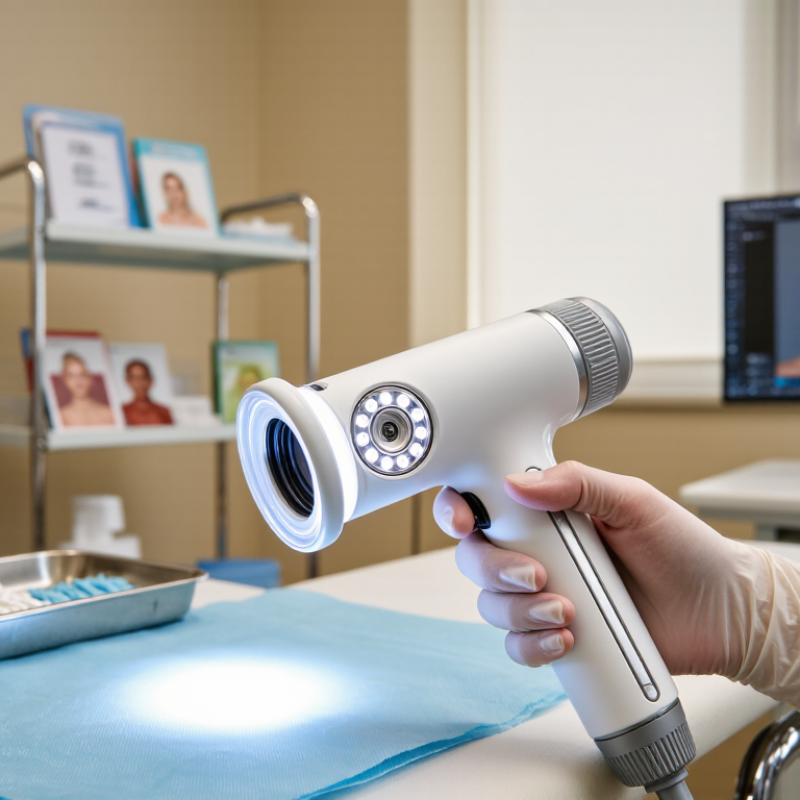
What Is the Best Hand Colposcope from China?
What Is a Hand Colposcope and How Does It Work?
A hand colposcope is a portable device for viewing the cervix with magnification. It combines optics, focused illumination, and digital imaging in one compact unit. During examination, a clinician uses a speculum and may apply acetic acid or iodine solution. Tissue changes can include whitening, punctation, mosaic patterns, and unusual blood vessels. The device captures images for clinical review, referral, and patient education. It does not replace biopsy results or professional judgment.
The World Health Organization recommends HPV DNA testing as a primary cervical screening method. IARC’s Global Cancer Observatory estimated 660,000 new cervical cancer cases worldwide in 2022. These figures show why accurate follow-up equipment matters. A hand colposcope can support visual assessment after abnormal screening results, especially in clinics with limited space. Its portability also helps outreach teams examine patients closer to their communities.
When choosing a Chinese-made hand colposcope, assess optical clarity, working distance, light uniformity, image storage, battery life, and cleaning procedures. A reliable supplier should provide technical specifications, quality documentation, user training, and traceable service records. In practice, image quality may vary under bright room lighting. Small screens can also hide subtle vascular details. I would test the device with real clinical workflows, not product images alone. That practical step is often overlooked.
A high-quality Chinese hand colposcope should support accurate observation, not merely advertise high magnification. In clinical use, a clear 1080p or higher image, adjustable white LED illumination, and stable optical focus are essential. Magnification should change smoothly, without image shaking or distracting digital distortion. A lightweight handle also matters. Examinations can become tiring when the device feels unbalanced.
The WHO/IARC Global Cancer Observatory estimated 662,301 new cervical cancer cases and 348,874 deaths worldwide in 2022. Reliable screening tools therefore need more than attractive specifications. A useful hand colposcope should record images with patient identifiers, examination dates, and visible anatomical orientation. Secure data export supports follow-up and clinical review. Disposable or autoclavable contact components can improve infection-control practice, but the exact method must match the manufacturer’s validated instructions. Brightness alone is not quality.
Procurement teams should examine calibration records, battery endurance, charging safety, and software stability. Compliance with relevant medical-device quality systems, including ISO 13485, adds confidence, but certification does not guarantee excellent clinical performance. The WHO 2021 guideline also stresses appropriate screening pathways and trained providers. That point is sometimes overlooked. A Chinese hand colposcope may offer strong value when its optics, ergonomics, documentation, and service support work together. Independent image testing and hands-on evaluation remain necessary. No device replaces clinical judgment. Even this assessment has limits, because hospital lighting, operator technique, and maintenance can change results.
What Is the Best Hand Colposcope from China? The practical answer depends on clinical workflow, not country alone. The WHO reported about 604,000 new cervical cancer cases worldwide in 2020. This scale makes dependable visualization and documentation essential. When comparing Chinese hand colposcope models, examine optical clarity, magnification range, working distance, and illumination consistency. A bright screen means little if tissue edges appear washed out.
A useful evaluation starts with a side-by-side test. Place each device over a textured clinical training model. Check focus at different distances, image lag, glare, and one-handed adjustment. Compare the actual weight, grip balance, battery duration, and charging time. According to ISO 13485 principles, manufacturers should show controlled quality systems and traceable production records. Ask for verification documents, risk-management evidence, and user instructions in clear English. Marketing numbers are not clinical proof.
Image resolution deserves caution. More pixels do not guarantee better diagnostic visibility. The IARC Global Cancer Observatory estimates that cervical cancer remains among the leading cancers affecting women globally. Therefore, stable imaging, secure file storage, and easy export can matter more than impressive specifications. Review warranty response times, replacement-part availability, training, and software updates. I would also test the device during a long clinic session. Hand fatigue is easy to overlook. My comparison may be imperfect, because lighting preferences differ between clinicians. Still, direct handling often reveals weaknesses that brochures hide.
Suggested procurement weights for comparing Chinese hand colposcope models and manufacturers. The framework emphasizes clinical image quality, documentation, usability, portability, infection control, and after-sales support rather than brand names.
Use these percentage weights as a practical checklist when reviewing technical specifications, regulatory documentation, user training, warranty terms, and service availability. A higher weight indicates greater influence on the purchasing decision.
What Is the Best Hand Colposcope from China?
The best hand colposcope is not chosen by image resolution alone. Buyers should verify the manufacturer’s quality system, product scope, and clinical evidence. A valid ISO 13485 certificate should name the correct manufacturing site and cover medical optical or diagnostic equipment. Check the certificate number, issuing body, expiry date, and audited scope.
Look closely at the product documents. The device should have a Declaration of Conformity and market-specific registration, such as European MDR documentation or applicable United States requirements. Ask for safety and electromagnetic compatibility test reports based on relevant IEC standards. ISO 14971 risk management records are also important. If the device includes software, request evidence of software lifecycle controls and cybersecurity review. Test reports should come from competent laboratories, preferably accredited to ISO/IEC 17025.
Do not accept scanned certificates without verification. Contact the issuing organization through its official website. Confirm that the model number matches the quotation, label, manual, and test report. Review optical magnification, illumination uniformity, image storage, battery safety, and cleaning instructions. A small gap matters. A report for a similar model may not support the offered model. Buyers should also request clinical evaluation data, warranty terms, calibration procedures, and traceability records. Documentation can look complete while leaving practical questions unanswered. The device must fit the intended examination setting, not merely pass a paperwork check.
| Verification Dimension | Recommended Requirement or Reference | Evidence Buyers Should Request | Why It Matters |
|---|---|---|---|
| Chinese medical-device registration | Verify the applicable NMPA classification, registration or filing status, and product scope for the exact model. | NMPA registration certificate or filing record, product technical requirements, registration-model correspondence, and Chinese instructions for use. | Confirms that the device is legally marketed in China under the declared intended use. |
| ISO 13485 quality management system | The manufacturer should maintain a current ISO 13485 certificate covering the relevant medical-device design and manufacturing activities. | Certificate number, issuing certification body, scope, manufacturing-site address, issue date, expiry date, and verification link or registry entry. | Provides evidence of controlled design, production, traceability, complaint handling, and corrective-action processes. |
| ISO 14971 risk management | The product risk-management file should address optical, electrical, thermal, software, cleaning, battery, and usability hazards. | Risk-management summary, hazard analysis, residual-risk evaluation, and linkage to verification and validation records. | Shows that foreseeable risks have been identified, controlled, and reviewed throughout the product life cycle. |
| IEC 60601-1 electrical safety | For electrically powered equipment, verify evaluation against IEC 60601-1, including protection against electric shock, excessive temperature, and mechanical hazards. | Test report from a competent laboratory, applicable edition, model identification, and deviations or conditions of acceptance. | Reduces electrical and physical safety risks during clinical use and charging. |
| IEC 60601-1-2 electromagnetic compatibility | Verify immunity and emissions testing according to the applicable edition of IEC 60601-1-2. | EMC test report listing radiated and conducted emissions, electrostatic discharge, radiated immunity, electrical fast transients, and surge tests where applicable. | Helps ensure stable imaging near other medical and wireless equipment. |
| IEC 62366-1 usability engineering | Verify that use-related hazards are assessed for examination, focusing, image capture, charging, cleaning, and disposal. | Usability-engineering summary, user-interface evaluation, use scenarios, and formative or summative evaluation records where applicable. | Supports safe operation by clinicians with different levels of experience. |
| Photobiological safety | Verify assessment of the LED or other illumination source under IEC 62471 or an equivalent applicable method. | Photobiological-safety test report, illumination-source details, exposure assumptions, and risk-group classification. | Helps control potential blue-light, ultraviolet, thermal, and optical exposure risks. |
| Software life-cycle controls | If the hand colposcope includes embedded software, an app, image processing, or patient-data functions, verify software life-cycle controls under IEC 62304 where applicable. | Software version history, cybersecurity documentation, verification records, update policy, backup procedure, and access-control description. | Reduces risks from software defects, data loss, unauthorized access, and uncontrolled updates. |
| European Union market access | For EU sales, verify conformity with Regulation (EU) 2017/745 when the product falls within its scope and classification. | EU Declaration of Conformity, CE marking information, EU representative details where required, technical documentation summary, and notified-body certificate when applicable. | Confirms the legal basis for placing the device on the EU market; CE marking alone is not sufficient evidence. |
| United States market access | For U.S. sales, verify the applicable FDA pathway, establishment obligations, device listing, and any required premarket submission. | FDA clearance or authorization number where required, device-listing details, establishment registration, labeling, and U.S. agent information where applicable. | Confirms that the product has followed the relevant U.S. regulatory route for its intended use. |
| Optical performance | Prefer documented magnification options, focus range, field of view, working distance, image resolution, color rendering, and illumination uniformity. | Calibration or performance report, original sample images, measurement method, and stated tolerances for each optical parameter. | Determines whether the device can provide consistent visualization for examination and documentation. |
| Image and video documentation | Verify image format, still-image and video capture, timestamping, export options, storage capacity, and compatibility with the intended clinical workflow. | User manual, sample exported files, data-transfer test, image-resolution specification, and data-retention procedure. | Supports diagnosis documentation, follow-up comparison, training, and auditability. |
| Battery and charging safety | Verify battery chemistry, rated capacity, charging time, operating time, overcharge protection, transport requirements, and replacement procedure. | Battery specification, charger certification, battery test summary, operating-cycle data, and replacement or disposal instructions. | Reduces downtime and helps prevent overheating, premature failure, or unsafe charging. |
| Cleaning and infection-control compatibility | The instructions should identify compatible wipes or disinfectants, contact time, prohibited chemicals, and whether any component is reusable or single-use. | Validated cleaning and disinfection instructions, material-compatibility data, ingress-protection information, and reprocessing limits. | Prevents damage to optics and housing while supporting appropriate infection-control practice. |
| Electrical and environmental protection | Verify the declared ingress-protection rating, operating temperature, humidity range, storage conditions, and resistance to routine handling. | Environmental test report, IP-rating evidence where claimed, operating/storage specifications, and transport packaging validation. | Indicates suitability for clinic, mobile, outreach, or multi-room use. |
| Traceability and quality records | Each delivered unit should be identifiable by model, serial number or lot number, software version, and production date where applicable. | Sample label, certificate of conformity, inspection record, calibration record, batch-release documentation, and recall-contact process. | Enables complaint investigation, servicing, recalls, and verification of delivered configuration. |
| After-sales support and warranty | Evaluate warranty duration, response time, repair location, spare-parts availability, training, software support, and replacement policy. | Written warranty terms, service-level agreement, preventive-maintenance instructions, spare-parts list, and escalation contacts. | Affects total cost of ownership, uptime, and continuity of clinical service. |
Choosing the best hand colposcope starts with clinical needs, not a product photograph. In a busy examination room, the device should feel balanced during repeated assessments. A clear image matters, but stable close-range focus matters too. Adjustable illumination should reveal cervical tissue without harsh glare. Magnification must suit the clinician’s examination habits. A lightweight handle can reduce wrist fatigue. Small controls matter.
Ask how the unit performs with gloves, limited space, and changing room light. Confirm image capture, storage, and export functions before purchase. Patient records require secure access and controlled data handling. Check battery duration, charging time, and performance during power interruptions.
When sourcing from China, review factory quality records, inspection procedures, and technical documentation. Also verify local registration, electrical safety, and infection-control requirements. Cleaning instructions must fit the clinic’s routine. If disinfection damages the lens housing, the specification is not practical. This is easy to miss.
Tips:
Compare the same test target under bright and dim conditions. Examine skin tones, fine vessels, and edge sharpness. Request a supervised trial with typical users. Ask about training, service response times, calibration guidance, and warranty terms. Do not judge from one impressive image. A device may look excellent in a brochure but feel awkward after twenty examinations. Clinical feedback should outweigh sales language. Reassess the choice after several weeks; early enthusiasm can hide workflow problems.