How to Choose the Right Implant Materials?

Choosing Implant Materials is not a simple contest between titanium, zirconia, cobalt-chromium, and polymers. The right choice depends on the implant’s location, expected loads, patient health, and how surrounding tissue responds. A dental implant faces different demands from a hip joint or fracture plate. Even a well-established material can be unsuitable for a particular patient or design.

Market data shows why this decision matters. Grand View Research estimated the global dental implants market at USD 4.6 billion in 2023, reflecting broad and growing clinical use. But market growth does not prove that one material is best. Evidence must come from the specific device and its intended use. The U.S. Food and Drug Administration evaluates medical-device safety in context, including materials and biocompatibility; ISO 10993 provides a framework for assessing biological risks. These references help, but they cannot predict every individual outcome.

In this guide, we compare common Implant Materials through practical factors: strength, corrosion resistance, wear, imaging considerations, and tissue compatibility. A surgeon may weigh fatigue resistance against stiffness, while a dentist may focus on osseointegration and visible appearance. Small differences matter. Material names alone are not enough; surface treatment, manufacturing quality, and clinical evidence also shape performance. One limitation deserves attention: long-term data may be stronger for some implant types than others. That uncertainty should be discussed, not hidden. The aim is a clearer conversation with a qualified clinician, not a one-material-fits-all answer.
How to Choose the Right Implant Materials?

Understanding the Role of Materials in Implant Design

Implant materials shape more than strength. They influence stiffness, wear, corrosion resistance, imaging, and how surrounding bone responds. For example, titanium alloys are widely used because they combine strength with corrosion resistance. A review by Niinomi in Acta Biomaterialia (2008) reports a Young’s modulus of about 110 GPa for common titanium alloys. Cortical bone is typically around 10–30 GPa. That mismatch can concentrate stress around an implant, so geometry and material choice must work together. Stronger is not always better.

Ceramics, polymers, and cobalt-chromium alloys each suit different design demands. Ceramic surfaces can offer excellent wear resistance, while polymers may serve as low-friction bearing components. The right choice depends on the load, contact surfaces, patient anatomy, and expected service life. ISO 5832 standards specify composition and properties for several metallic implant materials; meeting a specification, however, does not prove that every design is suitable for every patient. Fit matters. A small change in stem thickness can alter stiffness and load transfer. I would still question any design decision based on one material property alone.

Tips: Ask how material, shape, and surface finish work as a system. Check the intended load and wear data, then compare them with the relevant ISO specification and clinical evidence. Note the trade-offs in plain language; they are easy to overlook.
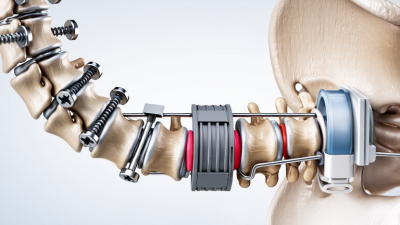
Comparing Common Implant Materials and Their Properties

How to Choose the Right Implant Materials?

Comparing Common Implant Materials and Their Properties

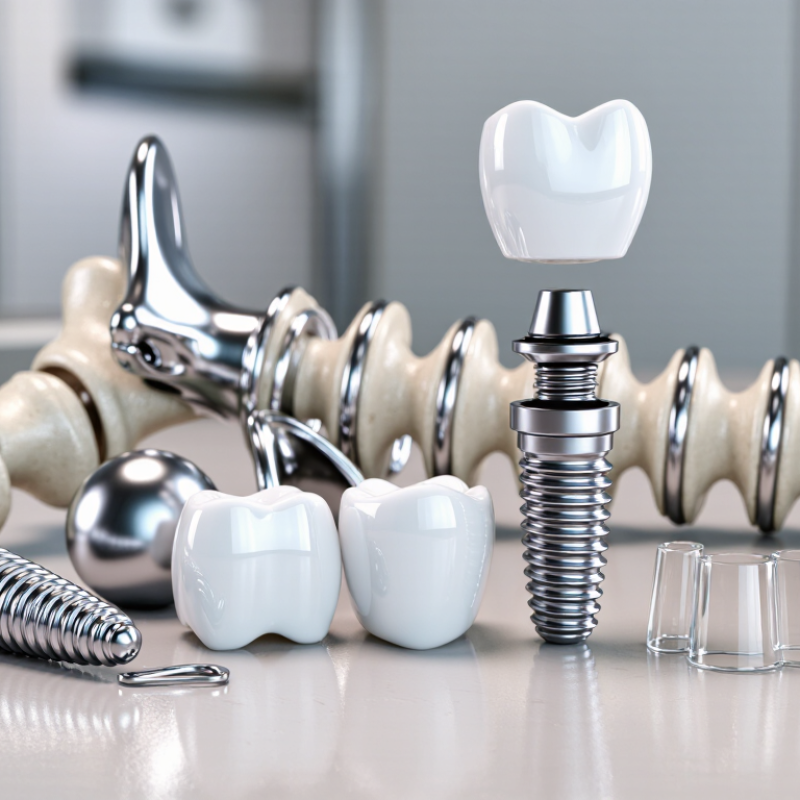
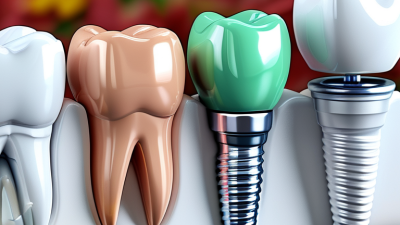
For dental implants, titanium and zirconia are common choices, but they behave differently. Titanium is a metal with a long clinical track record. Its elastic modulus is about 110 GPa, while zirconia’s is roughly 200 GPa, according to published materials-science data. Both are much stiffer than natural bone. That difference matters: load transfer, implant shape, and bone quality also influence performance.

Titanium has extensive long-term clinical evidence and can integrate closely with bone. A systematic review by Jung and colleagues in Clinical Oral Implants Research reported about 95.2% implant survival after ten years. This figure describes implants overall, not a direct comparison between titanium and zirconia. That distinction matters. Zirconia is metal-free and tooth-colored, which can help when gum tissue is thin or appearance is a concern. However, its long-term evidence base is less extensive, and ceramic components may be more vulnerable to fracture under certain forces.

Material choice is not a simple ranking. A clinician should assess bite forces, bone volume, gum thickness, allergies, and the planned restoration. Ask how much evidence supports the specific implant design and follow-up period. Small details matter. Even a strong material can perform poorly if placement, healing, or maintenance is inadequate. The evidence is still evolving.

Evaluating Biocompatibility, Durability, and Compatibility

Choosing an implant material means weighing tissue response, mechanical demands, and the patient’s daily movement. Titanium alloys are lightweight and commonly used where bone integration matters. Cobalt-chromium alloys resist wear under repeated loading. Ceramics can offer smooth bearing surfaces, but brittleness remains a concern. No material is perfect.

Biocompatibility depends on more than a material’s name. Surface finish, coatings, corrosion, and tiny wear particles can affect surrounding tissue. Clinicians also consider allergies, bone quality, and prior reactions. A material that suits one patient may not suit another. That judgment can be difficult, especially when long-term evidence is limited.

Durability should be assessed through real-world follow-up, not laboratory strength alone. The Australian Orthopaedic Association National Joint Replacement Registry’s 2023 report tracked nearly 1.75 million joint-replacement procedures through 2022. Registry results help reveal revision patterns over time, though they cannot isolate material effects from surgical technique or patient factors. Compatibility matters too: components must work together under load, and the implant must suit imaging needs and anatomy. Ask how the proposed material performs in comparable patients, what monitoring is planned, and what trade-offs remain uncertain. A plain answer is useful. A guaranteed outcome is not.

Matching Material Choices to Implant Type and Patient Needs

A suitable implant material depends on its job and the person receiving it. A dental implant must anchor securely in the jaw, while a joint implant must tolerate repeated loading and movement. Titanium alloys are commonly used in both settings because they combine strength with relatively low weight. Ceramic options may suit some dental or joint applications, but they are not right for every design or patient.

Details matter. Clinicians weigh bone quality, anatomy, expected activity, and the implant’s contact with surrounding tissue. For a joint replacement, bearing surfaces also matter: they affect friction and wear over time. A patient with a known metal sensitivity should discuss it before surgery, though sensitivity alone does not automatically determine the best material. The implant’s exact composition and the evidence for that device deserve a careful review.

In practice, the choice is less tidy than a comparison chart suggests. Age, healing, prior surgery, and the possibility of future revision can all change the discussion. No material is perfect. Ask the surgeon why a particular option fits the implant type, what trade-offs it carries, and how follow-up will track healing and performance. The right answer should reflect both clinical evidence and the patient’s priorities.

How to Choose the Right Implant Materials? — Matching Material Choices to Implant Type and Patient Needs

Implant component or type Common material choice May suit these needs Key considerations
Endosseous dental implant body Commercially pure titanium Many routine cases where a well-established material with a long clinical history is desired. Titanium is strong, corrosion-resistant, and widely used for dental implants. Clinical success also depends on implant design, surface, placement, bone quality, and ongoing care.
Endosseous dental implant body for higher mechanical demands Titanium alloy, commonly an aluminum- and vanadium-containing alloy Cases where high strength is important, subject to the clinician’s assessment of anatomy and loading. Titanium alloys can provide greater strength than commercially pure titanium. The specific alloy and device design matter; suitability should be assessed by the treating dental professional.
Endosseous dental implant body when a metal-free option is requested Zirconia ceramic Some patients who prefer a metal-free implant option, or selected cases where a light-colored material is considered useful. Zirconia is a ceramic, not a metal. It has a growing clinical evidence base, but long-term evidence is less extensive than for titanium. Design options may be more limited, and ceramic fracture risk should be considered.
Implant abutment, especially in a posterior or high-load area Titanium Cases where strength and a familiar, widely used connection to the implant are priorities. Titanium abutments are commonly used. The connection, restorative plan, gum tissue, and forces on the implant all influence material selection.
Implant abutment in a visible area Zirconia, sometimes with a titanium base Selected cases where soft-tissue appearance is a concern, particularly when a grayish show-through is undesirable. Zirconia may offer a light-colored appearance, but it is not automatically preferable. Tissue thickness, bite forces, connection design, and the risk of chipping or fracture need consideration.
Crown or bridge attached to the implant Zirconia, lithium disilicate, or porcelain-fused-to-metal Material can be selected to balance appearance, strength, available space, and the location of the restoration. These are restorative materials, not implant-body materials. The best option depends on bite forces, whether the restoration is a single crown or a bridge, and the dentist’s restorative plan.

Important: This table is general educational information, not a personalized recommendation. A dentist or oral surgeon should consider medical history, bone and gum conditions, bite forces, restoration type, and patient preferences. No implant material removes the need for good oral hygiene and regular follow-up.

Reviewing Risks, Maintenance, and Long-Term Performance

Choosing an implant material is not just a question of strength. The right option depends on the implant’s location, the surrounding bone, and your medical history. Titanium alloys have a long record of use and can bond closely with bone. Zirconia is ceramic and may suit some patients seeking a metal-free option. Neither material is ideal for every case. Reactions to implant materials are uncommon, but allergies and sensitivities deserve discussion before treatment.

Maintenance affects performance, whatever the material. For an oral implant, plaque around the gumline can cause inflammation and, over time, bone loss. Daily brushing and cleaning between teeth matter; so do regular clinical checks. Ask which cleaning tools are safe for your restoration. Report persistent swelling, bleeding, pain, or a change in how the implant feels. Small warning signs can be easy to dismiss.

Long-term results also depend on surgical technique, healing, bite forces, and habits such as smoking. Research does not predict an individual outcome with certainty. It varies. Ask your clinician to explain the evidence for the specific implant type, likely maintenance needs, and what follow-up involves. Bring details of past allergies or implant problems, and request clear records of the material used. I would not choose by appearance alone; that can overlook practical trade-offs.

How to Choose the Right Implant Materials?

Comparing stiffness: approximate elastic modulus (GPa)

Typical elastic-modulus values are approximately 100–110 GPa for commercially pure titanium, 105–115 GPa for Ti-6Al-4V, and 200–210 GPa for Y-TZP zirconia. The plotted values are representative midpoints of these ranges. Modulus describes stiffness—not clinical success, fracture risk, or maintenance needs by itself.

Titanium alloys have a long clinical track record and are generally corrosion resistant. Zirconia is a ceramic and can be more susceptible to brittle fracture, particularly in some designs. For either material, long-term outcomes also depend on implant design, placement, loading, and ongoing oral hygiene and professional follow-up.