
For global buyers, choosing a roll thread machine involves more than comparing prices and motor power. The right equipment must match thread diameter, pitch, material strength, production volume, and available workshop space. A machine designed for small steel fasteners may perform poorly on larger alloy components. That difference can affect output, tool life, and product consistency.
Practical evaluation should begin with real production details. Ask suppliers to test your samples using the required thread profile and material. Check the finished thread under proper gauges, not only through photographs or sales claims. Review rolling force, spindle speed, die changing time, lubrication needs, noise levels, and operator controls. Short trials reveal problems early. They also show how quickly workers can adjust the machine. A clear manual and responsive technical support matter, especially when the buyer operates in another country.
Reliable suppliers should provide accurate specifications, inspection records, warranty terms, spare-parts guidance, and packaging details. Confirm electrical requirements before shipment. Local service capacity may be limited, so remote troubleshooting deserves careful attention. Certifications can support confidence, but they should match the destination market and actual machine configuration. Documents alone are not enough.
No roll thread machine is perfect for every factory. Some advertised capacities may depend on ideal materials, skilled operators, or frequent maintenance. That is easy to overlook. Buyers should compare verified performance, total ownership cost, and long-term support instead of choosing the lowest quotation. A careful decision protects production quality and reduces unpleasant surprises after installation.
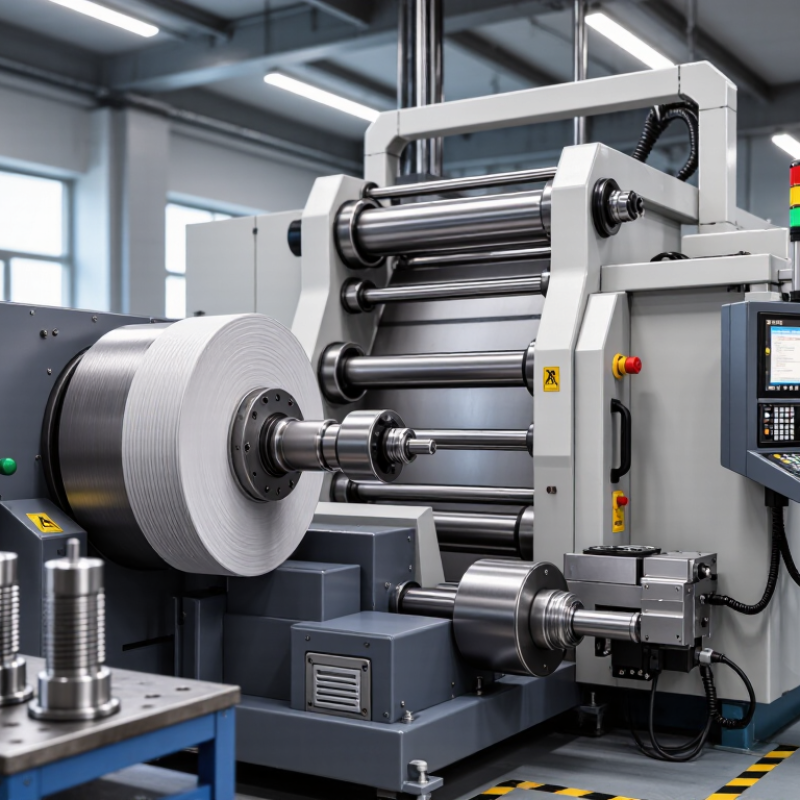
A roll thread machine creates external threads by pressing hardened dies against a rotating blank. Unlike cutting methods, it usually displaces material instead of removing it. The result is work-hardened. Thread roots can become stronger, while production remains fast and consistent. Common designs include flat-die, planetary, and through-feed machines. Each design suits different part shapes, thread lengths, and output levels.
These machines serve many industries. They produce bolts, screws, studs, and threaded shafts for construction, automotive equipment, agricultural machinery, and general manufacturing. Some lines process thousands of parts per hour. Others handle smaller batches requiring careful setup. Engineers should check thread diameter, pitch, blank material, hardness, and required accuracy. Steel, stainless steel, and selected nonferrous materials may require different tooling and pressure settings.
Specifications alone can mislead. A catalogue rarely shows vibration, die-changing time, or operator learning curves. Global buyers should request sample parts, inspection data, safety documentation, and electrical requirements before purchasing. Confirm available die sizes and local technical support. Small details matter. I would also test the machine with the actual material, not only a supplier’s sample blank. That test may reveal feeding problems, surface marks, or unexpected adjustment time. A reliable choice balances output, maintenance access, tooling cost, and the skills available in the workshop.
Choosing a roll thread machine starts with the thread, not the machine’s advertised capacity. Record diameter, pitch, thread length, tolerance, and required daily output. A 2024 World Steel Association report placed global crude steel production near 1.9 billion tonnes, but steel grades behave differently during rolling. Low-carbon steel may roll smoothly, while hardened alloy steel needs higher forming force and stronger dies. Check tensile strength, hardness, ductility, and surface condition before requesting quotations.
Material is only half the decision. Estimate real production volume, including setup time, die changes, inspection, and planned maintenance. Grand View Research valued the global metal stamping market at more than USD 260 billion in 2023, showing the scale of formed-metal demand, but market size cannot predict your factory’s workload. A machine producing 120 parts per minute may still lose money if changeovers consume an hour. Measure trial batches, not brochure claims. Small volumes may favor a flexible two-die system, while continuous production may justify automatic feeding and in-line gauging.
Ask suppliers for sample-rolling tests using your actual blanks. Inspect crest filling, lead accuracy, runout, and surface damage under magnification. ISO 898-1 can guide mechanical-property checks for carbon and alloy steel fasteners. Keep a record of failed trials; it feels inconvenient, but those failures reveal die pressure and lubrication limits. I would also leave spare capacity. Forecasts are often optimistic. A machine running at 70–80% of its rated load usually leaves room for material variation, urgent orders, and future thread sizes.
| Buyer Requirement | Typical Thread Size | Suitable Workpiece Materials | Recommended Machine Configuration | Typical Production Volume | Approximate Rolling Force Range | Key Technical Checks | Best-Fit Application |
|---|---|---|---|---|---|---|---|
| Prototype and maintenance work | M2–M8 or equivalent small external threads | Low-carbon steel, free-machining steel, aluminum alloys, brass | Compact two-die flat or in-feed rolling machine with manual or semi-automatic loading | Up to 2,000 pieces per day, depending on part geometry and loading time | Approximately 5–25 kN | Check die availability, setup access, maximum blank diameter, and compatibility with short production runs | Repair shops, toolrooms, prototypes, and mixed-batch production |
| Small-batch industrial production | M4–M12 or equivalent | Low- and medium-carbon steel, stainless steel grades with suitable ductility, copper alloys | Flat-die machine with adjustable rolling pressure and automatic part ejection | 2,000–10,000 pieces per day | Approximately 15–60 kN | Verify thread length, die-change time, automatic feeding options, and repeatability of thread pitch | General fasteners, shafts, studs, and custom components |
| Medium-volume continuous production | M6–M20 or equivalent | Medium-carbon steel, alloy steel in a suitable pre-hardness condition, ductile stainless steel | Two-die cylindrical or flat-die machine with automatic feeding, part counting, and in-process inspection | 10,000–50,000 pieces per day | Approximately 40–150 kN | Confirm motor power, rolling speed, cooling arrangement, tool life, and integration with conveyors | Automotive, construction hardware, industrial fasteners, and fittings |
| High-volume fastener production | M8–M24 or equivalent | Low- and medium-carbon steel, selected alloy steels, ductile stainless steel | High-speed automatic two-die machine with bowl or linear feeding, automatic lubrication, and quality monitoring | 50,000–200,000 pieces per day, subject to thread length and part size | Approximately 80–250 kN | Evaluate cycle time, feeder stability, die service life, overload protection, and spare-tool availability | Standard bolts, screws, studs, and high-repeatability production lines |
| Large-diameter industrial components | M20–M60 or equivalent | Medium- and low-alloy steel, ductile stainless steel, selected nonferrous alloys | Heavy-duty cylindrical or planetary rolling machine with powered in-feed and rigid workholding | 500–10,000 pieces per day | Approximately 200–800 kN | Check maximum rolling diameter, thread length, machine rigidity, foundation requirements, and operator safety systems | Large studs, hydraulic components, energy equipment, and heavy machinery parts |
| Long-shaft or through-feed parts | Commonly M6–M30, depending on shaft diameter | Low-carbon steel, alloy steel, stainless steel with adequate formability | Through-feed cylindrical rolling machine with automatic axial guidance and continuous part handling | 20,000–150,000 pieces per day | Approximately 50–300 kN | Measure shaft straightness, required thread position, entry and exit clearance, and maximum part length | Studs, threaded rods, shafts, and components requiring consistent axial positioning |
| High-strength threaded parts | M8–M30 or equivalent | Alloy steels and medium-carbon steels before final heat treatment | Rigid in-feed or through-feed machine with closed-loop pressure control and controlled preforming | 5,000–80,000 pieces per day | Approximately 100–350 kN | Roll threads before hardening when possible; verify material condition, blank diameter, grain flow, and post-process heat treatment requirements | High-strength bolts, drive components, and load-bearing threaded parts |
| Stainless-steel threading | M3–M20 or equivalent | Ductile austenitic stainless steels and other grades approved for cold forming | Low-speed or servo-controlled machine with accurate lubrication and adjustable dwell or rolling pressure | 2,000–50,000 pieces per day | Approximately 20–180 kN | Control work hardening, galling, lubrication, surface condition, and blank diameter; test the exact grade before volume production | Medical, food-processing, chemical, and corrosion-resistant hardware |
| Aluminum and brass components | M2–M16 or equivalent | Formable aluminum alloys, copper, brass, and bronze grades suitable for cold forming | Precision flat-die or cylindrical machine with lower force settings and non-marking part contact surfaces | 5,000–100,000 pieces per day | Approximately 5–80 kN | Check surface protection, lubricant compatibility, die finish, burr control, and risk of material pickup | Electrical hardware, fittings, lightweight assemblies, and decorative components |
| Short-thread parts and restricted access | M3–M16 or equivalent | Low-carbon steel, brass, aluminum, and ductile stainless steel | In-feed rolling machine with short-thread tooling and adjustable axial stops | 5,000–100,000 pieces per day | Approximately 10–120 kN | Confirm minimum thread length, shoulder clearance, part orientation, and the required runout or chamfer | Screws, shoulder components, pins, and parts with nearby heads or flanges |
| Precision or critical-thread production | M4–M24 or equivalent | Suitable ductile steels, stainless steels, and nonferrous alloys validated through process trials | Servo-controlled rolling machine with automatic gauging, pressure monitoring, and traceable parameter storage | 1,000–50,000 pieces per day | Approximately 20–250 kN | Specify thread tolerance, flank angle, pitch diameter, surface roughness, concentricity, and inspection frequency | Aerospace-support components, precision machinery, instrumentation, and safety-related parts |
Machine type should match the thread profile, workpiece size, and production rhythm. Flat-die machines suit common bolts and medium-volume work. Cylindrical machines handle continuous parts and specialized profiles. Planetary models can process short components quickly, but tooling changes may require more planning.
Compare maximum thread diameter, pitch range, rolling pressure, spindle speed, and machine footprint. A larger motor is not automatically better. It may increase energy use without improving thread quality.
Specifications should be checked against real production samples. Ask whether the machine maintains thread height and pitch under repeated loads. Inspect the die mounting system, guide accuracy, lubrication method, and noise level.
Servo-driven feeding can reduce positioning errors. Sensors can detect missing parts or abnormal pressure. PLC control and remote monitoring also support consistent output across different shifts. However, automation is not a cure-all. Poor setup still creates defective threads, sometimes faster.
Tips: Request a trial using your actual material and blank diameter. Measure thread gauges, cycle time, power demand, and changeover minutes.
Confirm electrical voltage, safety compliance, spare-part access, and operator training for your destination country. A simple interface may be more reliable than excessive software.
I have seen buyers focus on maximum speed, then struggle with maintenance and training. That choice deserves another review.
Supplier quality should begin with evidence, not attractive photographs. Ask for material certificates, spindle runout records, process-control documents, and a factory acceptance test using your thread size. The ISO Survey 2022 recorded about 1.26 million ISO 9001 certificates worldwide, but certification alone does not prove machine accuracy. Request recent inspection data and customer references from comparable industries. Ask for evidence. A useful test should show cycle time, thread-gauge results, noise, and performance after continuous operation. Small details matter.
Certifications must match the destination market and machine configuration. Check the declaration of conformity, electrical safety documentation, risk assessment, and applicable machinery standards. For European shipments, verify that the technical file supports the required conformity marking. Do not guess. A certificate issued for another model may have little value.
Independent inspection before shipment can reveal loose guards, poor wiring, or missing emergency-stop labels. These faults are easy to overlook during a video call.
Shipping reliability also affects the machine’s real cost. UNCTAD’s Review of Maritime Transport reports that more than 80% of global merchandise trade moves by sea, so packaging and port planning deserve attention. Confirm moisture protection, shock indicators, lifting points, spare-parts packing, and agreed Incoterms. The World Bank’s Logistics Performance Index 2023 covers 139 economies and highlights customs, tracking, and delivery timeliness. Choose a supplier offering installation guidance, readable manuals, training, and defined response times. Remote support sounds efficient, but complex alignment problems may still require a local technician. This is where many buying plans become too optimistic.
How to Choose a Roll Thread Machine for Global Buyers?
For global buyers, the purchase price is only the visible cost. Total ownership cost includes tooling, electricity, labor, maintenance, downtime, installation, and disposal. The U.S. Department of Energy’s Improving Motor and Drive System Performance sourcebook estimates that motor systems consume about 70% of manufacturing electricity. An 18-kilowatt machine running eight hours daily for 260 days uses 37,440 kilowatt-hours yearly. At $0.12 per kilowatt-hour, electricity alone costs about $4,493. Demand charges and peak tariffs may increase this figure.
Use local operating data, not optimistic supplier assumptions. IEA’s Energy Efficiency 2023 report states that industry represents about 37% of global final energy demand. Compare five-year costs under different energy prices, production volumes, and labor rates. Include die replacement, lubricant consumption, training, spare parts, freight, commissioning, and lost output during failures. Three scenarios help.
Request a documented acceptance test before payment. Check thread pitch, cycle time, surface quality, vibration, noise, and positioning accuracy. ISO 230-2 offers a recognized method for evaluating positioning performance. Ask for power readings during forming and idle periods. Ask how quickly critical parts can arrive in your region. One honest warning: predicted uptime is often optimistic. Keep a contingency allowance, perhaps 10–15%, for integration problems and early repairs. Your spreadsheet may still be wrong. Recalculate it after six months of real production data.